
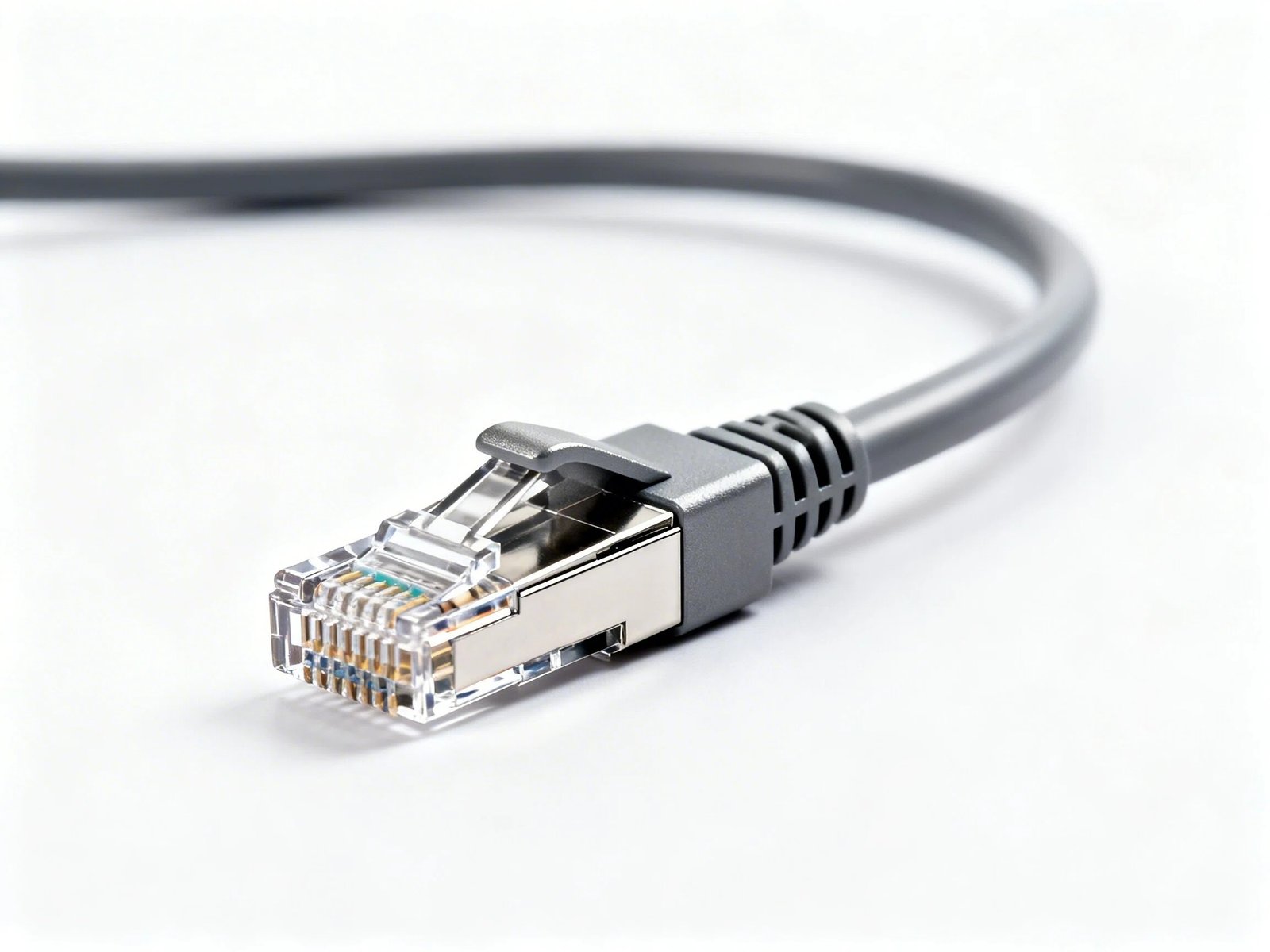
The structured cabling industry evolves constantly—not always in revolutionary leaps, but through careful refinements that address real-world installation challenges. In late 2024, the Telecommunications Industry Association (TIA) released a significant revision to its flagship standard: TIA-568.2-D.
This update introduces important changes for 28 AWG patch cords, Power over Ethernet (PoE) , and testing requirements. For network designers, installers, and procurement professionals, understanding these changes is essential to ensuring compliance and future-proof performance.
Here’s what you need to know.
What changed?
- Previous standards required patch cords to use 24 AWG or 26 AWG stranded conductors.
- The new standard explicitly permits 28 AWG cords in certain configurations, provided they meet all transmission performance requirements (Category 6A or higher).
Why it matters:
- High-density environments: In data centers and server rooms, 28 AWG cords are significantly thinner, improving airflow and simplifying cable management in crowded racks.
- Weight reduction: Thinner cables reduce weight in overhead cable trays, easing structural load.
- Bend radius: Smaller diameter cords offer greater flexibility in tight spaces.
Important caveat: 28 AWG cords have higher insertion loss than their thicker counterparts, so distance limitations apply. The standard requires that the total channel length (including the 28 AWG cord) still meets the 100-meter Class EA (Cat6A) requirement. In practice, this means 28 AWG cords are typically used for short connections (under 5 meters) within racks.
2. PoE Power Levels and Temperature Rise Get More Attention
Power over Ethernet has become ubiquitous—powering everything from security cameras to LED lighting and wireless access points. But higher power levels (up to 90W with PoE++) generate heat, which can degrade cable performance if not managed properly.
What changed?
- TIA-568.2-D introduces more explicit guidance on current-carrying capacity and temperature rise in bundled cables.
- It emphasizes that heat generated by PoE must be considered when designing cable bundles, especially in conduit or cable trays with limited airflow.
Why it matters:
- Bundling factors: When many PoE cables are bundled together, heat can accumulate. The standard reminds designers to derate (reduce) cable bundle sizes or increase ventilation to stay within temperature limits.
- Conductor size: Thicker conductors (23 AWG vs. 24 AWG) generate less heat for the same current. This reinforces the importance of pure copper and adequate gauge for PoE-heavy installations.
- Jacket rating: Cables used in plenum spaces must maintain their temperature rating even under full PoE load.
What this means for buyers:
- Always specify pure copper for PoE runs—CCA (Copper-Clad Aluminum) has higher resistance, generates more heat, and may not comply with the new guidance.
- Consider 23 AWG for long PoE runs or high-density bundles.
3. Field Testing Requirements Are Clarified
Ensuring that installed cabling meets performance claims requires accurate field testing. TIA-568.2-D updates the test parameters and pass/fail criteria for field testers.
What changed?
- Clarifies the required test parameters for Category 6A and higher, including Return Loss and Insertion Loss limits.
- Emphasizes the importance of using updated test firmware that reflects the latest standards.
- Introduces more specific guidance for testing shielded cabling, ensuring that shield continuity is properly verified.
Why it matters:
- Accuracy: Using outdated test limits can result in false passes or false failures. Installers must ensure their testers are running the latest software.
- Documentation: The standard encourages providing test reports to end users as proof of compliance—a practice we at Vankosen have long recommended.
What This Means for Your Next Project
The TIA-568.2-D update doesn’t revolutionize cabling overnight, but it offers practical tools for better, more efficient installations:
- 28 AWG patch cords give you more flexibility in high-density racks—but use them wisely, respecting distance limits.
- PoE considerations are now front and center—design for heat, choose pure copper, and don’t skimp on conductor gauge.
- Testing remains the final checkpoint—insist on certified test reports to verify performance.
At Vankosen, we’ve aligned our product specifications with these latest requirements. Our 28 AWG slim patch cords are fully tested to meet Cat6A performance, and our pure copper Cat6 and Cat6A cables are engineered to handle the thermal demands of high-power PoE applications.
Need Help Navigating the New Standard?
Every project is unique. If you have questions about how TIA-568.2-D affects your specific installation—or which cables best meet the new requirements—our technical team is here to help.
Contact Us for a consultation or request our latest compliance documentation.
发表回复